
12 Recruiting Process Insights from a College Golfer: Your Secret Edge
The Official Tour vs. The Inside Track
You’re grinding. You’re checking scores, planning your tournament schedule, and battling the panic of the college recruiting clock. But there’s a massive blind spot: You’re treating the coach like the source of truth.
Most coaches do tell you the truth. However they stop short of unveiling everything. In part because they may not know or because they have other assistants that support the program. There are a myriad of reason but for certain, a coach is not the only source of truth. (Sorry coaches!)
When a college golf coach talks to you during the recruiting process, it’s an audition. They’re selling a vision of their program’s future—a vision that includes you as an integral part of building a successful program or continuing a tradition etc. They rarely, if ever, mention the 5 a.m. cold-weather qualifying rounds, the roommate from a different continent, or the stress of missing three weeks of class for travel.
This is why you need the player’s perspective. This isn’t just about finding a better school; it’s about taking control of the biggest decision of your young life and making it based on the unfiltered, player-to-player truth.
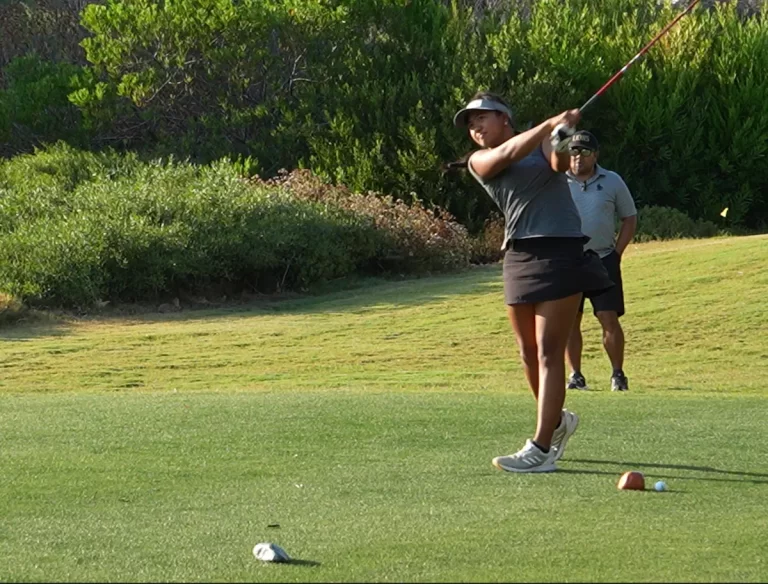
🎥 WATCH THE INSIGHTS: We sat down with Breleigh, who just after she went through the chaos of commitment, to get the unfiltered advice. This video is the ultimate case study. Watch it and use the strategy below! Subscribe to @golfingscholars on YouTube!
Why You Need to Talk to a Player (The Real Why)
The coach’s version of the team is the marketing copy. Think of it as the glossy brochure. The player’s version is closer to the user manual you get with your item. This is where you get the detailed information about the how the program works. How the college supports athletes and more.
Culture vs. Chemistry: Is the Locker Room Supportive or Silent?
“Team Chemistry” is the phrase every coach uses. But what does that mean on a Tuesday afternoon when it’s 35 degrees, and the qualifying results were just posted?
A player will tell you if you should wait to hear from the coach, go talk for yourself, let someone more senior inquire for you or if everyone is afraid to talk to the coach after a high score. Ask the player: Is the competition about elevating the team, or just surviving the cut?
The Coach’s Reality Check: What They Do on a Tuesday
A coach is an amazing salesperson in July. It is part of their job. They are building a future. They have to be forward looking. The more subtle question is who are they in February?
A player will tell you if the coach is hands-on, analyzing Trackman data with you after every range session, or if they are primarily focused on administrative work, delegating all instruction to the assistant. You need to know if the coach you commit to is the one you’ll be seeing every day and if that style or personality is a fit for you.
The Academic Truth About Making Up for Travel
College golf is a job that interferes with your actual job (school). Perhaps a better way to say it is your primary job is to graduate school but you need your ‘golf job’ to support that primary job. A coach will say, “We have great academic support.” A player will give you the specifics: Do you have a mandatory team study hall? Do you have to write essays on a plane? Do professors give extra credit, or do you have to plead with them after missing a week of class? It is crucial to understand if travel significantly impacts your GPA. You have to factor in these things into your ultimate decision.
Your Action Plan: How to Find and Reach Out
This is the part that scares recruits—the reach-out. But coaches look for self-starters. This is your chance to show initiative.
1. Find Your Targets: Go to the school’s athletic website. Look at the roster and choose a couple of players (sophomores or juniors are usually best). Check LinkedIn (for professional formality) or Instagram (for a quick message).
2. The Professional Hook (Be Respectful): You are interrupting their student-athlete life. Be complimentary and concise. Do not talk about your scores. Talk about their program.
Sample Script (Email):
“Hi [Player Name], I’m [Your Name], a golfer interested in your program for the 20XX class. I’m especially impressed by how the team handles travel during the spring season. I would be grateful for 10-15 minutes to ask a few quick questions about the team culture. No pressure if you’re busy!”

3. Take Responsibility: This is your research. Do not have your parent write the email. The high school golfer needs to own this process from the first click to the final handshake.
The 12 Questions That Cut Through the Noise
These questions are designed to get you the genuine recruiting process insights from a college golfer.
Write these down. Put a version in your own words. They are your script and reminders for critical things to cover. If you ask 3 different golfers these questions, you’ll start to see the patterns and differences between different schools and coaches.
The Questions About Practice and The Grind
1. “How is the lineup really determined? Is it purely scores, or does past performance, seniority, or relationship with the coach play a role?” (This reveals the inside “politics” of the team.)
2. “Walk me through your worst practice week. How many hours are mandatory vs. how many do you actually spend working on your game?”
3. “What’s the team’s policy on individual coaches? Can you work with your swing coach during the season, or does the coach prohibit outside help?”
4. “Be honest: How often do you feel burned out? And when you do, where do you turn for support?”
The Questions About Coach and Culture
5. “What is the biggest difference between what you heard the coach say during your recruiting visit and their actual day-to-day temperament?” (Wait and use silence—that’s where the truth is.)
6. “How does the coach handle a player who is struggling with their mental game or has a bad case of the full-swing yips?”
7. “If you had a bad round, who is the first person you talk to: the coach, a teammate, or someone else?” (This reveals the real sense of team chemistry and support within the program.)
8. “How much freedom do you have to choose your own tournament schedule in the summer?”
The Questions About Life and Academics
9. “What is the biggest non-golf related surprise or challenge of freshman year? (Not the parties ha ha – the actual difficulty or challenge.)”
10. “What’s the average time the team gets back to campus after a road trip? Are you expected to be in class the next morning?”
11. “What is the required involvement with sponsors, alumni, or fundraising? How much time does that take?”
12. “If you could only give your high school self one piece of non-golf advice about college, what would it be?” This is the best question to end with when you interview. Sometimes it will reveal little or surface level things but often this is where the golden nugget is hidden.

Conclusion: Make Your Own Call
You’ve read the strategy. You’ve been given the script. And you’ve seen the proof in our video, featuring actionable recruiting process insights from a college golfer.
The prospective college golfer who asks these 12 questions is a recruit who is taking control. Don’t worry if the coach finds out. A good coach at a good school will respect the level of detail, and you will have peace of mind.
Don’t stop your research about a golf program at the shiny brochure. Dig a little deeper.
One last tid bit. Players have agendas. When you begin collecting recruiting process insights from a college golfer is important to speak more than just one player. Get input from multiple players to find the patterns. See where there is consensus. Start making an informed decision based on the real-world experience of a current player.
YOUR NEXT STEP: Watch the full conversation and SUBSCRIBE to @golfingscholars on YouTube for more exclusive player insight! Then make those calls!
If this caught your interest and you have more questions, visit our home page to find more tips on topics like researching college golf programs, creating a golf resume or making your showcase video.





One Comment
Comments are closed.